
Egypt in 3 weeks is the trip where you finally see the whole country, and this is how we build it
Egypt in 3 weeks is the trip where you finally see the whole country, and this is how we build it
Three weeks is the length at which Egypt stops being a checklist and becomes a country. In 21 days you can do Cairo and Giza properly, add Saqqara, Dahshur and a night in Alexandria, sail the Nile on a slower boat or a dahabiya, stand in front of Abu Simbel without racing back to the bus, give the Luxor west bank three full mornings, and still have a week for the White Desert and a Red Sea or Sinai finish. The skill is not cramming more in. It is ordering the blocks so you never cross the country twice, and planting real rest days where the fatigue arrives. Here is the plan, week by week.
Why three weeks changes what kind of trip this is
Most Americans see Egypt in eight to twelve days: Cairo, a four-night cruise, Abu Simbel as a dawn dash, home. Every day is a site day, and the desert, the Mediterranean and the Sinai do not exist. The third week is where the country opens up: a second morning at a place, which is when you start reading the walls instead of photographing them; the corners no package includes, like Beni Hasan or the White Desert at sunrise; and days with nothing scheduled.
Who this suits: retirees with the calendar for it, couples on a once-in-a-lifetime trip, families with older kids, second-time visitors who want the deep version, and anyone combining culture with diving. If you are still choosing a length, our guide to how many days you need in Egypt lays out what each week buys, and the 12-day Egypt itinerary is the closest shorter cousin of this plan.
The 3-week Egypt itinerary at a glance
Think in blocks of three to five nights with a fixed base. Every block change is a long transfer, so the blocks run down the country in order and then out to the coast, never bouncing north and south.
| Days | Base | What you cover | Moving on |
|---|---|---|---|
| 1 to 4 | Cairo or Giza | Giza plateau, Grand Egyptian Museum, Saqqara and Dahshur, Islamic and Coptic Cairo | Drive north |
| 5 to 6 | Alexandria | Catacombs, Roman theater, Qaitbay fort, the Corniche | Drive back, fly Cairo to Aswan |
| 7 to 8 | Aswan | Philae, felucca, Nubian village, Abu Simbel at dawn | Board the boat |
| 9 to 12 | Nile boat or dahabiya | Kom Ombo, Edfu, Esna, sailing time, village stops | Disembark in Luxor |
| 13 to 15 | Luxor | Karnak, Luxor Temple, three mornings on the west bank | Fly to Cairo, or drive via Minya |
| 16 to 18 | Bahariya and the White Desert | Black Desert, Crystal Mountain, a night under the chalk, hot springs | Drive back to Cairo |
| 19 to 21 | Sinai or the Red Sea | Dahab and St Catherine, or Hurghada and the reefs | Fly to Cairo for departure |
Two rest days are already inside that grid. Middle Egypt, if you want it, replaces the Alexandria nights or a desert night. Fitting Alexandria, Middle Egypt, the desert and Sinai all at once turns 21 days into a transfer marathon, the one version of this trip we will not build.
Week one: Cairo done properly, then the Mediterranean
Four days in the capital is the right number, and almost nobody gives it that. Day one is the plateau, before the buses arrive. Day two is the Grand Egyptian Museum while you are fresh, then Coptic Cairo. Day three goes south to Saqqara and Dahshur, where you climb inside the Red Pyramid and see the Step Pyramid and the Bent Pyramid with a fraction of the Giza crowds. Day four is Islamic Cairo on foot: the Citadel, Al Muizz street, Al Azhar Park at sunset, dinner in Khan el Khalili.
Alexandria: two nights, not a day trip
The drive north takes about three hours, and as a day trip Alexandria is a long ride for a fast look. With two nights it becomes a different Egypt, Greek and Roman rather than pharaonic: the catacombs of Kom el Shoqafa, the amphitheater at Kom el Dikka, the fort on the site of the lighthouse, fish on the Corniche after dark. You return the next morning for an afternoon domestic flight to Aswan. If the coast does not call you, trade it for Fayoum and Wadi el Hitan.
Week two: Aswan, Abu Simbel and a slower way down the Nile
Fly Cairo to Aswan and work north with the current, finishing in Luxor, which deserves the most time. Two nights in Aswan before the boat is the first thing three weeks buys you: Philae by motorboat, the granite quarries, a felucca afternoon around Elephantine, dinner in a Nubian village. Abu Simbel goes on the second morning, by road, leaving before dawn and back by early afternoon. Our page on how to visit Abu Simbel explains why the early departure is worth the alarm clock. If you would rather sleep there and see the temples at sunrise, add a night and drop one desert day.
Cruise ship or dahabiya
The four-night cruise on a big ship is fine, and on a short trip it is the efficient choice. With three weeks, the dahabiya Nile cruise is the better fit: a two-masted sailboat with a handful of cabins, no engine noise, moorings at islands the ships cannot reach, and a pace that lets you sit on deck for a whole afternoon. It takes a night or two longer for the same river, and on this itinerary that is the point. The temple stops are the same either way, Kom Ombo, Edfu and Esna, plus Gebel el Silsila on a dahabiya.
Luxor west bank in depth, the part every short itinerary skips
A standard cruise gives Luxor one west bank morning: three tombs in the Valley of the Kings, Hatshepsut, the Colossi of Memnon, done by lunch. It is the reason people go home saying Luxor blurred together. Give it three mornings and it becomes the highlight of the trip. Start early, because the west bank is a furnace by noon in any season.
- Morning one, the Valley of the Kings, slowly. The standard tombs plus the extra-ticket ones worth it, above all Seti I when open and Ramesses V and VI. Then Hatshepsut and the Colossi on the way back.
- Morning two, the nobles and the workers. The Tombs of the Nobles, with the banquets and harvests the royal tombs never show, then Deir el Medina, the village of the men who cut the royal tombs, and Medinet Habu.
- Morning three, the Valley of the Queens and the Ramesseum. Nefertari's tomb if it is open, the finest painted room in Egypt, then the fallen colossus at the Ramesseum.
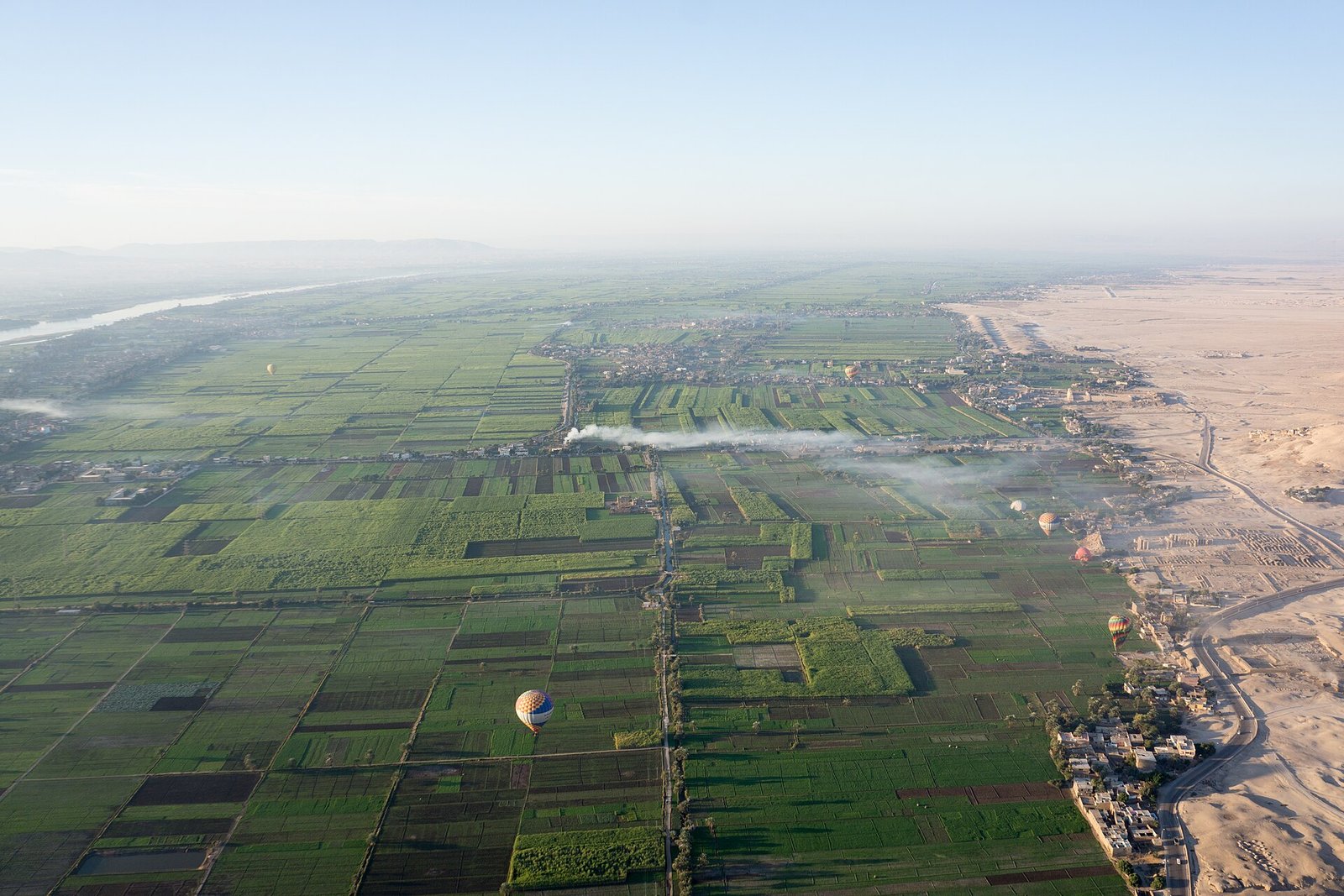
Karnak and Luxor Temple take the first afternoon and the last evening on the east bank. A sunrise hot air balloon fits any of the three mornings, since you are up anyway.
The Middle Egypt option: Minya, Beni Hasan and Tell el Amarna
Between Luxor and Cairo lies the stretch of the Nile almost no foreign visitor sees. Minya is the base, about four hours by road from Luxor, and it opens three sites that belong on any serious Egypt trip.
- Beni Hasan. Middle Kingdom rock tombs high in the cliff above the river, with the wrestling, weaving and bird-catching scenes from every textbook, and very likely nobody else there.
- Tell el Amarna. The city Akhenaten built for the sun disk and abandoned within a generation. The palaces are mud outlines, but the northern tombs with their portraits of the royal family and the sheer scale of the plain are worth the drive.
- Tuna el Gebel. Catacombs of mummified ibises and baboons and the Greco-Roman tomb of Petosiris.
Two nights in Minya cover all three and turn the Luxor to Cairo leg into a drive with a purpose. Hotels are simpler than in Luxor and your guide handles the local arrangements the region still requires. We recommend it for second-time visitors and for anyone who has read about Akhenaten and wants to stand on the ground.
The Western Desert: Bahariya, the White Desert and the Siwa question
From Cairo it is about four hours by road to Bahariya oasis, then a 4x4 south through the Black Desert, past Crystal Mountain and into the White Desert, where wind has carved the chalk into mushrooms, chickens, camels and things with no name. You camp. Dinner is cooked over a fire, foxes come to the edge of the light, and at sunrise the formations turn pink, then blinding white.
Three days and two nights is the right length: one in the desert camp, one back in Bahariya at a lodge with a hot spring, then the drive to Cairo. In winter the desert drops close to freezing at night, around 2 to 5 C (36 to 41 F), while the days sit near 20 C (68 F), so pack a real jacket.
Siwa: only if you drop something else
Siwa oasis, out by the Libyan border, is the most beautiful place in Egypt and costs a full day of driving each way. A proper visit is three nights: the Shali mud fortress, the Oracle temple where Alexander came, salt lakes you float in, a Berber-speaking culture unlike anywhere on the Nile. It fits only if you give up the Sinai block, or Alexandria plus Middle Egypt. We will tell you honestly whether that trade is for you.
The finish: Sinai and Dahab, or the Red Sea coast
End on the water. After two weeks of stone, three days of sea reset everyone, and the last leg to Cairo is a short domestic flight.
Sinai: Dahab and St Catherine
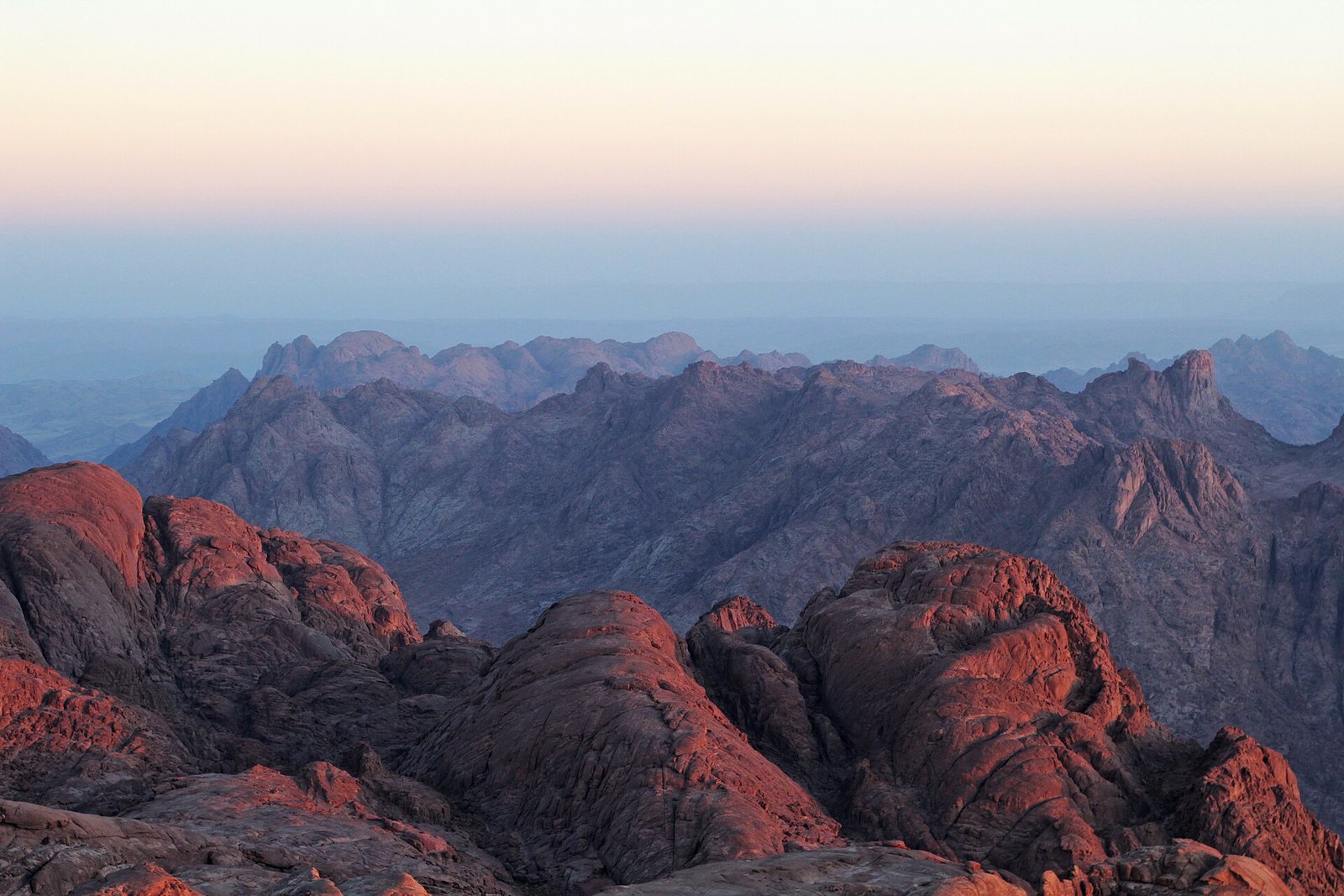
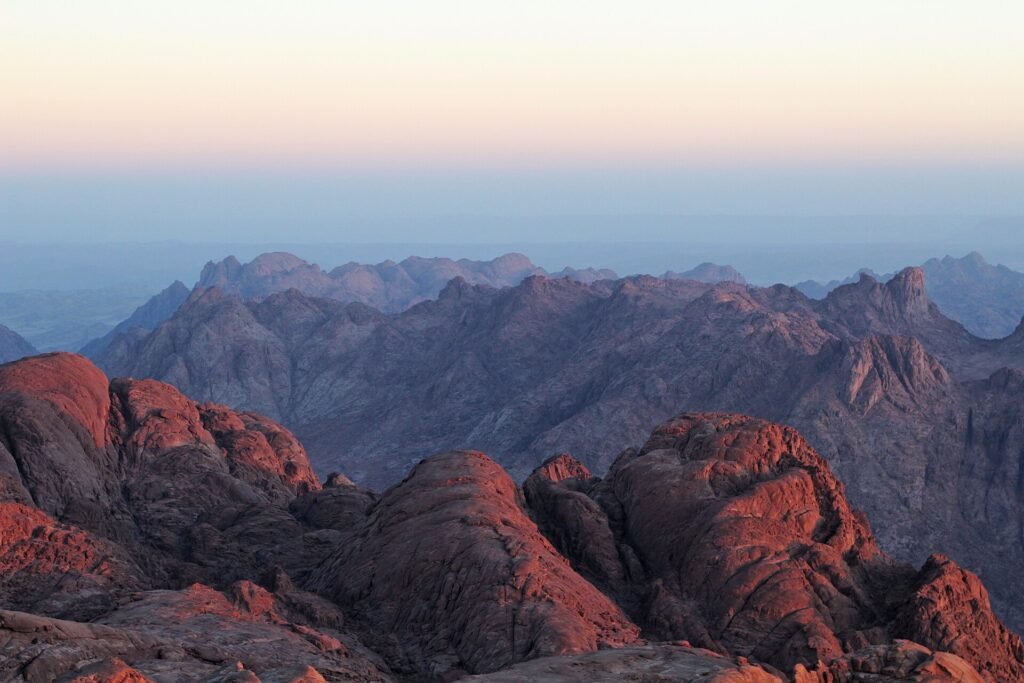
Fly Cairo to Sharm el Sheikh and drive an hour north to Dahab, a laid-back diving town with shore dives at the Blue Hole and the Canyon and snorkeling straight off the beach. From Dahab it is two hours to St Catherine, where you climb Mount Sinai overnight, watch the sun rise over the peninsula, and come down to the monastery. Our pages on Dahab and the Mount Sinai sunrise climb cover both. This is the finish for travelers who want the trip to end somewhere with a soul.
The Red Sea coast
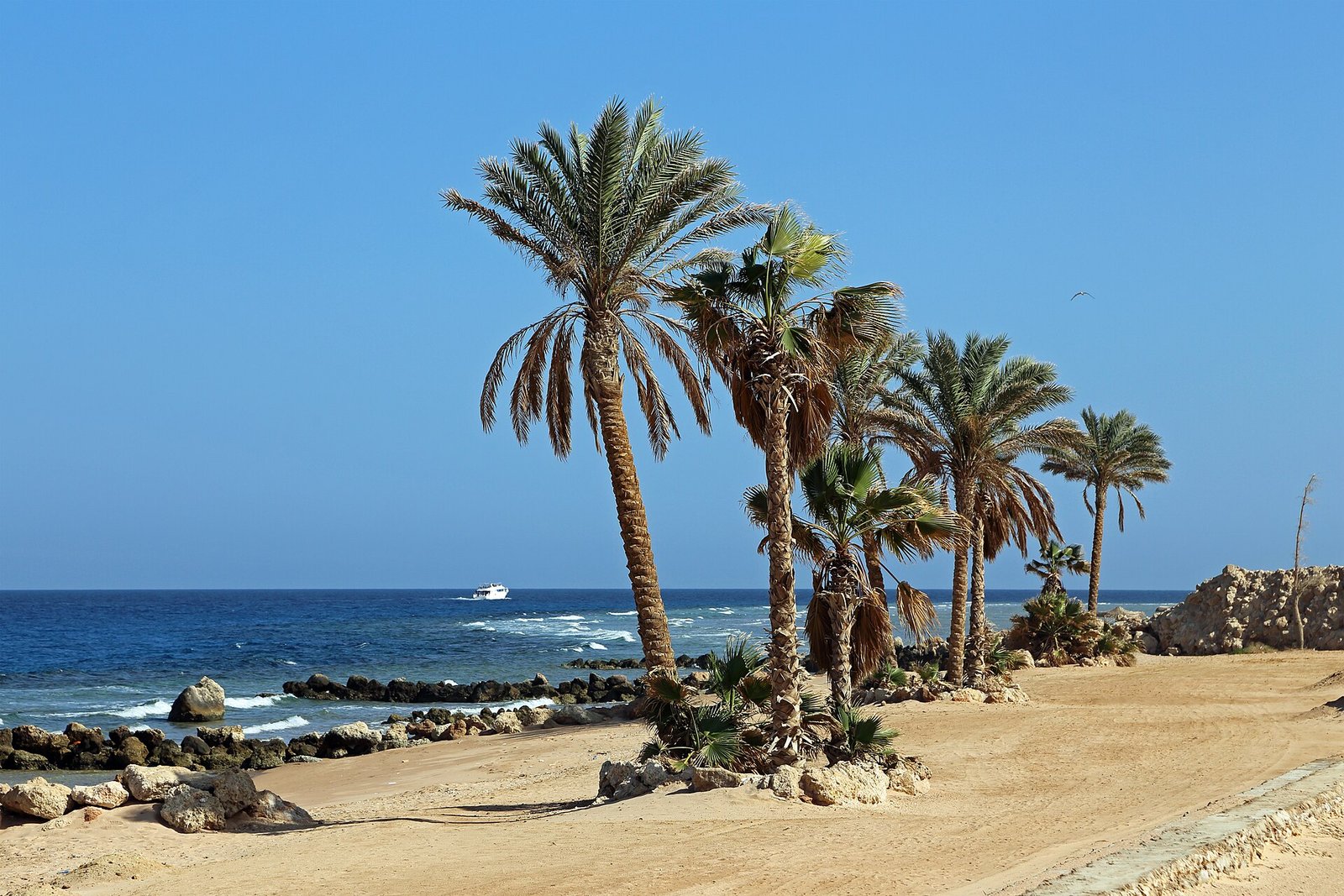
Fly Cairo to Hurghada, or drive from Luxor in about four hours if you reorder the blocks. This is resort Egypt: big pools, a house reef, boat trips to Giftun island, diving for every level. El Gouna is the polished, walkable version, Sahl Hasheesh the quiet one. Choose it when the group includes people who want a pool and people who want a reef.
Pacing: how not to be exhausted by day ten
The risk on a three-week trip is never running out of things to see. It is saturation, and it arrives earlier than people expect. After enough temples in a row the reliefs stop being read and you walk the last sites on autopilot. A useful sign: when you stop taking photos, you have hit it. What prevents it is alternating registers rather than stacking, a boat, a desert, a reef between the heritage blocks, which is why the grid puts the river between Cairo and Luxor and the sea at the end.
- Two or three empty days, spread out. One on the boat, one in the oasis, one on the coast. Not all at the end.
- Early starts, early finishes. Sites at seven, lunch at one, the afternoon free.
- One block change every three to five days. More than that and you spend the trip packing.
- A laundry stop in the middle. Pack for a week and wash twice. Nobody should carry 21 days of clothes.
And ask the question almost nobody asks before booking a long trip: do you actually like traveling three weeks straight? Some people are happier with two ten-day trips a few years apart.
When to go for three weeks
October through April is the window in which every block works at once. Luxor and Aswan sit around 22 to 28 C (72 to 82 F) by day in winter, desert nights are cold but clear, and the Red Sea is still swimmable. Late October, November, February and March are the sweet spots. The month-by-month detail is in our guide to the best time to visit Egypt.
May through September changes the shape rather than ruling it out. Luxor passes 40 C (104 F) most afternoons, so west bank days become dawn-only and the boat is where you spend the heat. The desert camp is uncomfortable in high summer and we usually swap it for more Sinai. A summer version leans toward the water and works well for families tied to school calendars.
Book a long trip well ahead. A dahabiya has six or eight cabins, the good desert camps fill on winter weekends, and three domestic flights, a boat, a 4x4 and seven hotels are far easier to coordinate with months of margin.
How Explora Egipto builds a 3-week trip
We are a local agency in Egypt with our own guides, drivers and vehicles. In practice:
- Start from what you care about. Divers get more coast, history readers get Middle Egypt, photographers get the dahabiya and the desert. The grid above is a starting point, not a product.
- Order the blocks so you never backtrack. Domestic flights where the distance calls for it, road where the road is the point.
- One Egyptologist guide for the whole Nile section, so the story builds instead of restarting with every new face. A separate desert crew and a Bedouin guide in the Sinai.
- Rest days written in, and a private driver for each block so the free afternoons are actually free.
- Everything booked directly, hotels, boat, domestic flights and the extra-ticket tombs, adjusted if a site closes or a sailing changes.
A trip like this is never a fixed package, so ask us for the quote. Tell us your dates, who is traveling and how you feel about camping and diving, and we come back with a day-by-day plan you can pull apart and rebuild with us.
Frequently asked questions
Is 3 weeks too long for Egypt?
Not if you like long trips. Egypt fills 21 days without repeating: two kinds of Nile boat, the desert, the Mediterranean, the Sinai and the Red Sea on top of the temples. The honest caveat is about you, not the country. If you have never traveled three weeks straight, consider whether two shorter trips would suit you better.
What is the best 3-week Egypt itinerary?
Four days in Cairo and Giza with Saqqara and Dahshur, two nights in Alexandria, two in Aswan with Abu Simbel, four or five nights sailing to Luxor, three nights in Luxor for the west bank, three days in the White Desert, and three days in Sinai or on the Red Sea. Middle Egypt can replace Alexandria or a desert night. Tell us what you care about and we reshape it.
Dahabiya or regular cruise ship on a long trip?
With three weeks, the dahabiya. It is slower, quieter and sails under canvas, moors at villages the big ships cannot reach, and adds Gebel el Silsila to the usual stops. It takes a night or two longer for the same river, which on a 21-day plan is the whole point. A standard ship suits you better if you want a pool, a bigger cabin and more company.
Can I fit Siwa oasis into 3 weeks in Egypt?
Yes, if you give something up. Siwa needs three nights plus a full day of driving each way from Cairo, so it costs about five days. Most people fund it by dropping the Sinai block, or Alexandria plus part of the coast. It is a superb trade for travelers who value remoteness and landscape over a beach finish, and a poor one for divers.
What is the best time of year for a 3-week trip to Egypt?
October through April, when Luxor, the desert and the sea all work at once. Late October, November, February and March give the best mix of warm south, mild north and manageable crowds. Bring a real jacket for the desert, where winter nights drop near freezing. In summer the plan tilts toward the coast and dawn starts.
How do you get between the regions?
Domestic flights for the long jumps, Cairo to Aswan, Luxor to Cairo and Cairo to Sharm el Sheikh or Hurghada, each about an hour or a little more. A private car with a driver for Alexandria, Abu Simbel, Bahariya and the Sinai roads, and a 4x4 inside the White Desert. The boat itself is the Aswan to Luxor transfer. We book and time every leg.
Three weeks, the whole country, one plan that fits you
Tell us your dates, who is traveling and how you feel about a night in the desert and a day on a reef. We come back with a 21-day plan ordered so you never cross Egypt twice, with the rest days already written in. No prices on this page, just the quote in your inbox.